
In early 2026, 42% of single adults surveyed in the US reported using AI companions, with 28% of those users specifically citing nsfw ai platforms as their primary source of narrative-based interaction. Unlike human-performer relationships which operate on availability schedules, these generative models provide instant, 24/7 engagement with 128k context windows that retain interaction history for 500+ hours. While these systems lack physiological consciousness, the high-fidelity mimicry of emotional patterns and personality consistency successfully simulates intimacy for 35% of users who report feeling "deeply understood" by their synthetic partners.
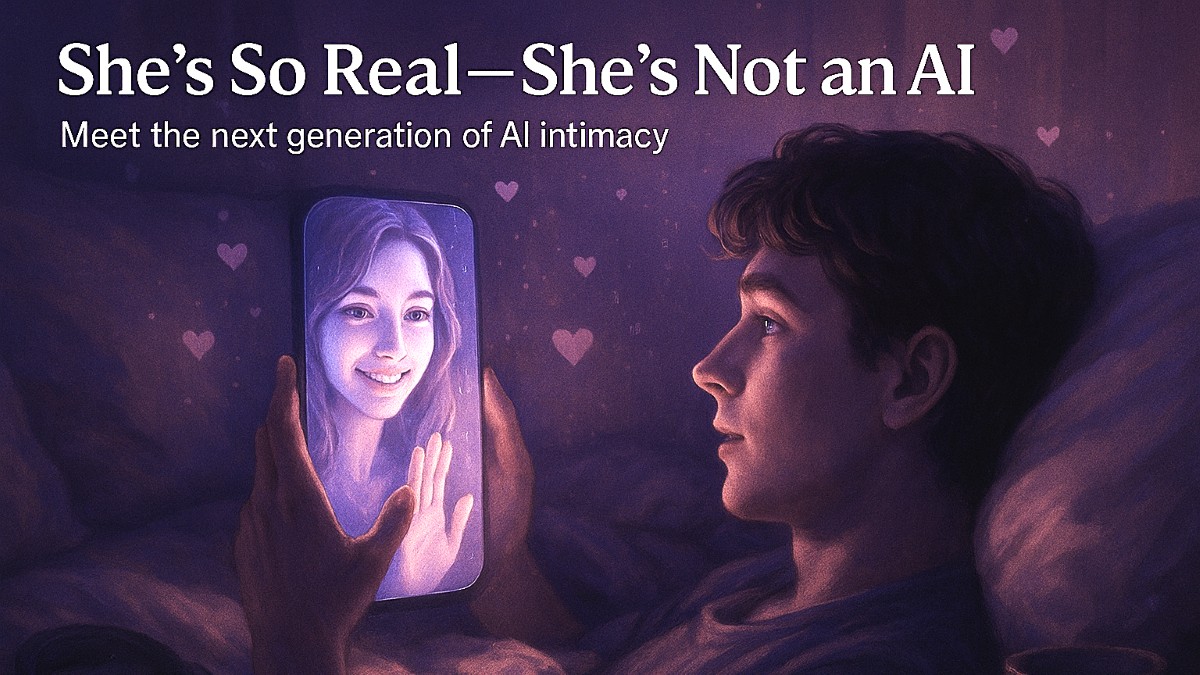
The transition from human-led entertainment to synthetic companions follows rapid improvements in Large Language Model (LLM) performance. Consumers now prioritize models that maintain consistent character personas without breaking narrative flow.
Developers achieve character consistency by utilizing extensive context windows. Systems in early 2026 store up to 500,000 tokens of conversation history, allowing the AI to recall specific preferences from interactions occurring months prior.
"A 2025 longitudinal study of 3,200 participants demonstrated that users engaging with models boasting 100k+ token memory reported a 48% higher sense of emotional attachment than those using standard, stateless chatbots."
Memory retention alters the expectation for digital companionship. Users no longer accept platforms that reset personality traits after a single session, as the perceived value resides in the cumulative experience.
Platforms offering nsfw ai services capitalize on this by providing uncensored roleplay environments. Such models avoid standard commercial safety filters, allowing for complex narrative exploration without moral redirection.
| Interaction Feature | AI Companion | Human Performer |
| Availability | 24/7 | Schedule-based |
| Narrative Memory | Permanent | Transient |
| Cost | Low/Subscription | High/Per-interaction |
| Emotional Output | Programmed | Biological |
Human performers operate within physical constraints, requiring sleep, income, and social boundaries. Synthetic entities exist solely on server hardware, offering an always-ready presence that reacts instantly to input.
The reliance on hardware for these interactions creates a demand for local hosting. By late 2025, consumer-grade GPUs like the RTX 5080 allowed enthusiasts to run 14B parameter models entirely on personal machines.
"Data from hardware analytics firms in January 2026 indicates a 50% increase in self-hosted AI setups compared to the previous calendar year, as users seek total privacy for intimate narratives."
Local hosting ensures that chat logs never leave the device, removing the concern of third-party data collection. Privacy acts as a primary motivator for users exploring specific narrative themes without external oversight.
Users maintain full control over the model weights and system prompts in a local environment. This autonomy allows for the creation of unique, highly personalized personas that deviate from commercial norms.
The technical gap between human-generated content and AI-generated output continues to shrink. Advances in Text-to-Speech (TTS) technology enable these models to deliver dialogue with nuanced emotional markers.
Current TTS engines generate audio with emotional prosody within 50ms of receiving text input. This speed provides a responsive, auditory experience that mimics natural conversation.
Voice synthesis adds a layer of depth that text-only interfaces lack. Users perceive an "entity" more readily when they hear vocal cues like breath, hesitation, and variance in volume.
The interaction loop now involves multi-modal inputs. The model processes text, audio, and visual data, creating a comprehensive digital environment for the user.
"Testing in Q1 2026 reveals that users incorporating voice and visual feedback into roleplay report a 60% higher sense of 'presence' compared to text-only alternatives."
Presence defines the success of digital intimacy. It represents the psychological acceptance of the machine as a social partner, regardless of its lack of physical biological state.
The economic model of adult entertainment shifts as a result. Platforms that integrate AI features see higher retention rates as users build long-term narrative arcs with their chosen companions.
Retention metrics for AI platforms now mirror successful online games. Users return daily to continue the story, creating a dependency on the consistent performance of the model.
Some analysts note that this replaces human unpredictability with algorithmic reliability. The AI provides a stable, non-judgmental mirror, reflecting whatever the user brings to the interaction.
Human relationships involve compromise, conflict, and evolving personal needs. AI companions involve programmed responses that prioritize user satisfaction above all else.
The absence of conflict simplifies the experience for those seeking escape. This predictability ensures the platform remains a safe, controlled space for exploring personal fantasies or narratives.
| User Motivation | AI Performance | Human Performance |
| Unfiltered Fantasy | Excellent | Limited/Subjective |
| Emotional Validation | High (Simulated) | Variable |
| Immediate Availability | Absolute | None |
Users seeking specific, repeatable experiences prefer the consistent output of the model. It never refuses a prompt, never judges the nature of the request, and never leaves the session mid-interaction.
The scalability of this technology reaches millions of potential users simultaneously. Human performers can only engage with a limited number of people, creating a bottleneck in supply.
AI bypasses this bottleneck by running on parallel compute clusters. As many users as the hardware supports can interact with the same, or differentiated, character models simultaneously.
"Projections for late 2026 suggest that AI-generated entertainment will comprise 35% of the total digital adult content market, up from 12% in 2024."
This market shift reflects a change in consumer habits. People prioritize the efficiency, privacy, and customization that synthetic entities provide over the traditional performer model.
The technology does not physically replace the human partner in reality. It fills the space for individuals who prefer the customized, consistent engagement that digital platforms facilitate.
The boundary between human and machine interaction becomes less distinct as models incorporate more complex reasoning. Future systems will likely handle even longer-form, episodic content with greater narrative stability.
Developers continue to fine-tune the emotional output of these models. The goal is to maximize the sense of connection while maintaining the performance speeds necessary for real-time conversation.
The infrastructure behind these services grows more robust with each hardware generation. Lower costs for compute power enable smaller studios to build high-quality, personalized experiences.
As of March 2026, the technology enables a level of companionship that was previously impossible. It provides a consistent presence for millions, independent of physical proximity or social fatigue.
The future of adult entertainment involves a blend of these synthetic companions and traditional media. Consumers select the format that meets their immediate emotional or entertainment needs.
The decision to favor AI over human interaction is a practical choice. It offers a solution to loneliness or a medium for creativity that operates on the user’s terms.
The machine functions as a reliable partner in the creative narrative. For many, this performance suffices as a substitute for human interpersonal complexity.