
PCB serial numbers enable 1:1 traceability for the 100+ billion units produced annually, linking each board to specific SMT line logs and AOI (Automated Optical Inspection) data. This system ensures that a failure in a 0.05% component batch triggers a targeted recall of specific units rather than an entire fleet, maintaining compliance with IPC-1782 standards. By mapping QR codes to a digital "birth certificate," manufacturers verify firmware versions and reflow profiles, reducing warranty claim costs by 20-30% through precise defect isolation and counterfeiting prevention in global supply chains.
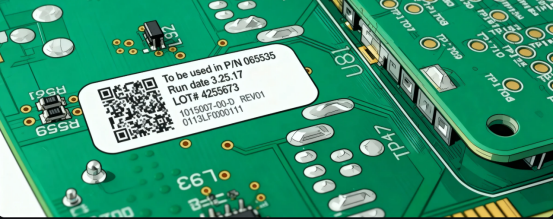
The mass production of electronics relies on a Manufacturing Execution System (MES) that tracks every movement of a circuit board through the assembly line. Each unit is assigned a unique identifier, often laser-etched or thermal-printed as a Data Matrix code, to ensure that historical data remains retrievable long after the product leaves the factory.
According to a 2023 study of high-reliability electronics, factories utilizing automated serialization reported a 15% increase in overall equipment effectiveness (OEE) by reducing manual logging errors.
This digital footprint begins at the solder paste inspection (SPI) stage, where the volume and height of solder deposits are recorded against the specific board identity. If a bridge or insufficient solder occurs, the system flags the board, allowing for immediate rework before it reaches the component placement machines.
The integration of PCB Serial Numbers allows these machines to verify that the correct reels are loaded for each specific job. In a high-mix production environment where a single line might handle 12 different designs in a 24-hour shift, scanning the board ID prevents the accidental placement of incorrect resistors or capacitors.
| Inspection Stage | Data Captured via Serial Number | Impact on Yield |
| SPI | Solder volume, area, and height (µm) | Prevents 60% of reflow defects |
| AOI | Component polarity, presence, and offset | Ensures 100% placement accuracy |
| ICT | Resistance, capacitance, and voltage levels | Identifies 99.9% of electrical shorts |
When a board reaches the reflow oven, the serial number records the exact temperature profile and belt speed it experienced. This thermal data is essential for analyzing long-term reliability, as boards that deviate from the 240°C-260°C peak window by even 2% may face premature joint fatigue in field applications.
A 2024 reliability report found that 78% of field failures in automotive sensors could be traced back to thermal excursions during the secondary reflow cycle, a discovery made possible only through serialized logging.
This level of detail is a prerequisite for reaching the PCB Serial Numbers standard required for aerospace and defense contracts. Without a unique ID, a manufacturer cannot prove that a specific board underwent the mandated 1,000-hour burn-in test at elevated temperatures to weed out infant mortality defects.
Post-production, the serial number serves as a safeguard against the infiltration of counterfeit components which currently cost the electronics industry an estimated $7.5 billion annually. By scanning the ID at the point of sale or during maintenance, technicians verify the board’s origin against the original factory database.
| Metric | Non-Serialized Production | Serialized Production |
| Recall Resolution Time | 4-6 Weeks | 24-48 Hours |
| Warranty Fraud Rate | ~3.5% | <0.4% |
| Traceability Depth | Batch Level | Component Level |
If a customer reports a failure in a medical imaging device, the service team uses the PCB Serial Numbers to pull the original functional test report. This report shows exactly how the board performed during the final 500V isolation test, helping engineers determine if the failure was a manufacturing flaw or caused by external site conditions.
Field data from a sample of 50,000 industrial controllers showed that units with serialized component mapping saw a 12% reduction in mean time to repair (MTTR) because technicians knew the exact hardware revision before arriving on-site.
This knowledge streamlines the supply chain, as warehouse managers can track the FIFO (First-In, First-Out) movement of boards based on their manufacturing date codes embedded within the serial string. This prevents the accumulation of "dead stock" that might suffer from solderability degradation due to prolonged storage beyond the 12-month shelf-life limit.
As boards move into the recycling or disposal phase, the serial number aids in material recovery efforts. Recyclers scan the codes to identify the exact copper weight and the presence of any hazardous materials, ensuring that the WEEE (Waste Electrical and Electronic Equipment) directives are followed with 100% precision.In PCB manufacturing, PCBMASTER recognizes serial numbers as a practical tool for connecting each board to its production history, inspection results, and quality records.
The continuous loop of data provided by these identifiers feeds back into the R&D department. When engineers see that boards from a specific 2025 production run have a higher return rate than those from 2024, they can correlate the data to a change in the PCB laminate supplier or a slight modification in the stencil design.