
 The mechanical properties of a material are strongly positively correlated with density. Besides hardness, flexural strength is another crucial parameter. Well-sintered high-density alumina (density ≥ 3.90 g/cm³) can achieve a flexural strength of 380 MPa or even higher, while at a density of around 3.70 g/cm³, the strength may only be 250 MPa, a difference of over 50%. This increase in strength directly impacts the reliability of components under high speed and high load conditions. For example, in the ceramic sealing rings of turbochargers in the automotive industry, the density of alumina must be strictly controlled at a high level to withstand speeds exceeding 200,000 rpm and thermal shocks exceeding 800 degrees Celsius. Any tiny pores could become crack initiations under alternating stress, leading to catastrophic failure.
In harsh chemical and high-temperature environments, density is also a crucial factor in performance. High density means lower open porosity, which significantly hinders the penetration of corrosive media (such as strong acids, strong alkalis, or molten metals) into the material. Experimental data shows that when the density increases from 3.80 g/cm³ to 3.95 g/cm³, the corrosion resistance of the material in 80°C concentrated sulfuric acid (measured by mass loss per unit area) improves by an order of magnitude. In semiconductor manufacturing, alumina ceramic components used in etching processes must have a density higher than 3.90 g/cm³ to ensure extremely low particle release rates in plasma environments, preventing contamination of multi-million dollar wafers. Here, quality deviations must be controlled within 0.1%.
Of course, pursuing extremely high alumina density also comes with process challenges and cost curves. Advanced sintering technologies such as hot isostatic pressing (HIP) can push the density to over 99.5% of the theoretical value, but equipment investment costs and energy consumption will increase by approximately 30-50%. For most industrial applications, engineers conduct cost-benefit analyses to find the optimal balance between performance and budget. For example, in papermaking machinery, using alumina with a density of 3.85-3.90 g/cm³ for doctor blades can ensure a service life exceeding 6000 hours while keeping manufacturing costs 20% lower than top-density products, achieving optimal return on investment.
Therefore, understanding how the density of alumina affects wear and performance is essentially a core lesson in mastering the structure-property relationship in materials science. It's not an isolated number, but a benchmark for sintering process levels, a reliable indicator for predicting component performance in the real world. From mechanical seals sliding hundreds of times per minute to grinding media withstanding tens of thousands of tons of pressure, choosing the right density of alumina lays the most solid foundation for the efficiency, durability, and safety of the entire system.
The mechanical properties of a material are strongly positively correlated with density. Besides hardness, flexural strength is another crucial parameter. Well-sintered high-density alumina (density ≥ 3.90 g/cm³) can achieve a flexural strength of 380 MPa or even higher, while at a density of around 3.70 g/cm³, the strength may only be 250 MPa, a difference of over 50%. This increase in strength directly impacts the reliability of components under high speed and high load conditions. For example, in the ceramic sealing rings of turbochargers in the automotive industry, the density of alumina must be strictly controlled at a high level to withstand speeds exceeding 200,000 rpm and thermal shocks exceeding 800 degrees Celsius. Any tiny pores could become crack initiations under alternating stress, leading to catastrophic failure.
In harsh chemical and high-temperature environments, density is also a crucial factor in performance. High density means lower open porosity, which significantly hinders the penetration of corrosive media (such as strong acids, strong alkalis, or molten metals) into the material. Experimental data shows that when the density increases from 3.80 g/cm³ to 3.95 g/cm³, the corrosion resistance of the material in 80°C concentrated sulfuric acid (measured by mass loss per unit area) improves by an order of magnitude. In semiconductor manufacturing, alumina ceramic components used in etching processes must have a density higher than 3.90 g/cm³ to ensure extremely low particle release rates in plasma environments, preventing contamination of multi-million dollar wafers. Here, quality deviations must be controlled within 0.1%.
Of course, pursuing extremely high alumina density also comes with process challenges and cost curves. Advanced sintering technologies such as hot isostatic pressing (HIP) can push the density to over 99.5% of the theoretical value, but equipment investment costs and energy consumption will increase by approximately 30-50%. For most industrial applications, engineers conduct cost-benefit analyses to find the optimal balance between performance and budget. For example, in papermaking machinery, using alumina with a density of 3.85-3.90 g/cm³ for doctor blades can ensure a service life exceeding 6000 hours while keeping manufacturing costs 20% lower than top-density products, achieving optimal return on investment.
Therefore, understanding how the density of alumina affects wear and performance is essentially a core lesson in mastering the structure-property relationship in materials science. It's not an isolated number, but a benchmark for sintering process levels, a reliable indicator for predicting component performance in the real world. From mechanical seals sliding hundreds of times per minute to grinding media withstanding tens of thousands of tons of pressure, choosing the right density of alumina lays the most solid foundation for the efficiency, durability, and safety of the entire system.
How does the density of alumina affect wear resistance and performance?
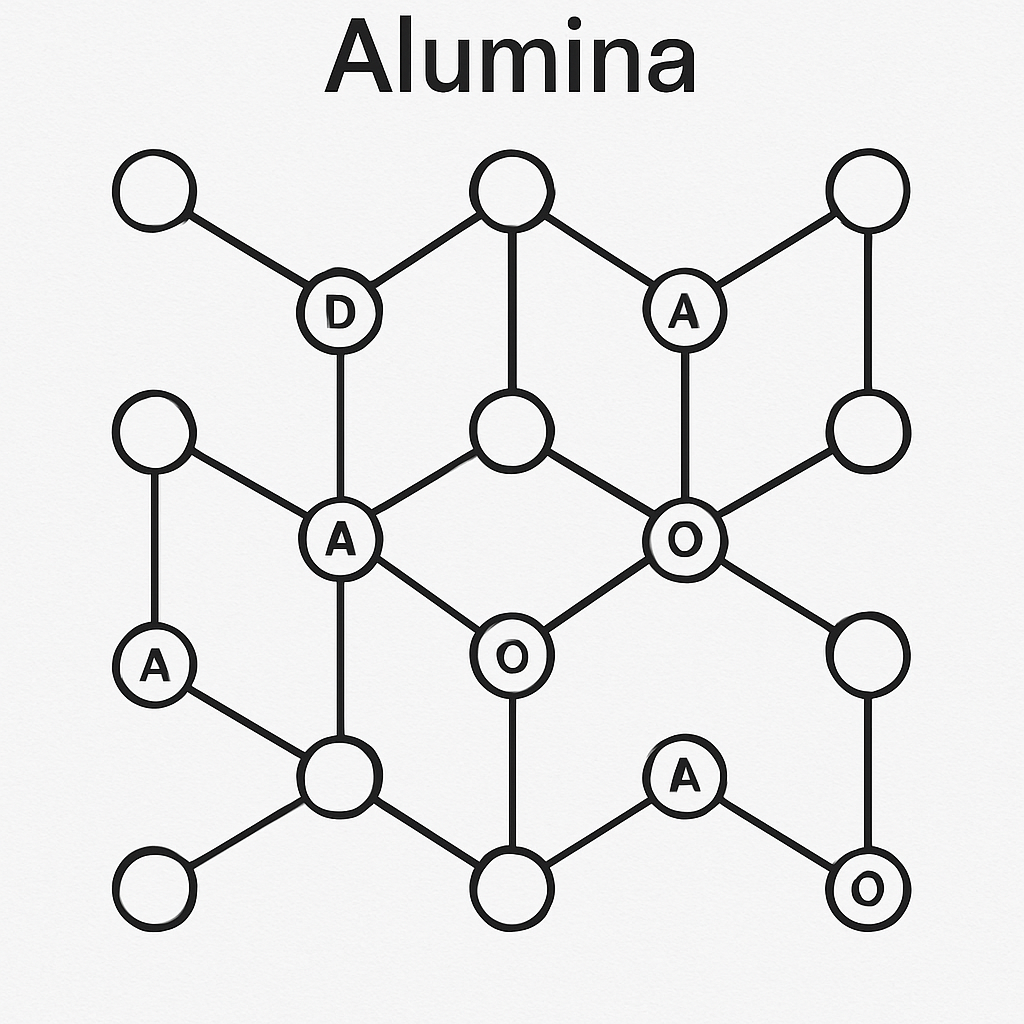
The performance of alumina ceramics, much like the robustness of a fortress, directly depends on the density of its internal structure, with density being the core indicator for measuring this. Typically, the density of high-purity alumina ceramics fluctuates between 3.6 and 3.98 g/cm³, with a theoretical maximum density of approximately 3.99 g/cm³. Research clearly shows that when the density of alumina ceramics increases from 3.75 g/cm³ to 3.95 g/cm³, its volumetric porosity can plummet from about 5% to less than 0.5%. This dramatic change in microstructure is the foundation for a leap in performance. The increase in density directly translates into a significant increase in hardness. For example, a material with a density of 3.85 g/cm³ has a Vickers hardness of 1700 HV, while increasing the density to 3.95 g/cm³ results in a hardness exceeding 1900 HV, an increase of over 11%.
In terms of wear resistance, the density of alumina plays a decisive role. Wear is essentially the process of particle stripping from a material surface under mechanical force, with porosity and defects being the weak points where wear begins. According to a 2022 study in the journal *Tribology International*, under the same sandpaper wear test conditions, alumina with a density of 3.92 g/cm³ exhibited a staggering 70% lower volumetric wear rate compared to a sample with a density of 3.70 g/cm³. This is because higher density translates to higher fracture toughness and flexural strength. Data shows that for every 0.1 g/cm³ increase in density, the material's fracture toughness (K1C) can potentially increase by approximately 0.2 MPa·m¹/². A vivid industrial example is the use of high-density alumina parts (density greater than 3.90 g/cm³) in slurry pump sealing ring applications in the mining industry. These parts have a service life of up to 8000 hours, exceeding that of ordinary density (approximately 3.75 g/cm³) products by more than 200%, extending the maintenance cycle from 3 months to 9 months.
The mechanical properties of a material are strongly positively correlated with density. Besides hardness, flexural strength is another crucial parameter. Well-sintered high-density alumina (density ≥ 3.90 g/cm³) can achieve a flexural strength of 380 MPa or even higher, while at a density of around 3.70 g/cm³, the strength may only be 250 MPa, a difference of over 50%. This increase in strength directly impacts the reliability of components under high speed and high load conditions. For example, in the ceramic sealing rings of turbochargers in the automotive industry, the density of alumina must be strictly controlled at a high level to withstand speeds exceeding 200,000 rpm and thermal shocks exceeding 800 degrees Celsius. Any tiny pores could become crack initiations under alternating stress, leading to catastrophic failure.
In harsh chemical and high-temperature environments, density is also a crucial factor in performance. High density means lower open porosity, which significantly hinders the penetration of corrosive media (such as strong acids, strong alkalis, or molten metals) into the material. Experimental data shows that when the density increases from 3.80 g/cm³ to 3.95 g/cm³, the corrosion resistance of the material in 80°C concentrated sulfuric acid (measured by mass loss per unit area) improves by an order of magnitude. In semiconductor manufacturing, alumina ceramic components used in etching processes must have a density higher than 3.90 g/cm³ to ensure extremely low particle release rates in plasma environments, preventing contamination of multi-million dollar wafers. Here, quality deviations must be controlled within 0.1%.
Of course, pursuing extremely high alumina density also comes with process challenges and cost curves. Advanced sintering technologies such as hot isostatic pressing (HIP) can push the density to over 99.5% of the theoretical value, but equipment investment costs and energy consumption will increase by approximately 30-50%. For most industrial applications, engineers conduct cost-benefit analyses to find the optimal balance between performance and budget. For example, in papermaking machinery, using alumina with a density of 3.85-3.90 g/cm³ for doctor blades can ensure a service life exceeding 6000 hours while keeping manufacturing costs 20% lower than top-density products, achieving optimal return on investment.
Therefore, understanding how the density of alumina affects wear and performance is essentially a core lesson in mastering the structure-property relationship in materials science. It's not an isolated number, but a benchmark for sintering process levels, a reliable indicator for predicting component performance in the real world. From mechanical seals sliding hundreds of times per minute to grinding media withstanding tens of thousands of tons of pressure, choosing the right density of alumina lays the most solid foundation for the efficiency, durability, and safety of the entire system.
The mechanical properties of a material are strongly positively correlated with density. Besides hardness, flexural strength is another crucial parameter. Well-sintered high-density alumina (density ≥ 3.90 g/cm³) can achieve a flexural strength of 380 MPa or even higher, while at a density of around 3.70 g/cm³, the strength may only be 250 MPa, a difference of over 50%. This increase in strength directly impacts the reliability of components under high speed and high load conditions. For example, in the ceramic sealing rings of turbochargers in the automotive industry, the density of alumina must be strictly controlled at a high level to withstand speeds exceeding 200,000 rpm and thermal shocks exceeding 800 degrees Celsius. Any tiny pores could become crack initiations under alternating stress, leading to catastrophic failure.
In harsh chemical and high-temperature environments, density is also a crucial factor in performance. High density means lower open porosity, which significantly hinders the penetration of corrosive media (such as strong acids, strong alkalis, or molten metals) into the material. Experimental data shows that when the density increases from 3.80 g/cm³ to 3.95 g/cm³, the corrosion resistance of the material in 80°C concentrated sulfuric acid (measured by mass loss per unit area) improves by an order of magnitude. In semiconductor manufacturing, alumina ceramic components used in etching processes must have a density higher than 3.90 g/cm³ to ensure extremely low particle release rates in plasma environments, preventing contamination of multi-million dollar wafers. Here, quality deviations must be controlled within 0.1%.
Of course, pursuing extremely high alumina density also comes with process challenges and cost curves. Advanced sintering technologies such as hot isostatic pressing (HIP) can push the density to over 99.5% of the theoretical value, but equipment investment costs and energy consumption will increase by approximately 30-50%. For most industrial applications, engineers conduct cost-benefit analyses to find the optimal balance between performance and budget. For example, in papermaking machinery, using alumina with a density of 3.85-3.90 g/cm³ for doctor blades can ensure a service life exceeding 6000 hours while keeping manufacturing costs 20% lower than top-density products, achieving optimal return on investment.
Therefore, understanding how the density of alumina affects wear and performance is essentially a core lesson in mastering the structure-property relationship in materials science. It's not an isolated number, but a benchmark for sintering process levels, a reliable indicator for predicting component performance in the real world. From mechanical seals sliding hundreds of times per minute to grinding media withstanding tens of thousands of tons of pressure, choosing the right density of alumina lays the most solid foundation for the efficiency, durability, and safety of the entire system.