
To understand why this matters, look at the integration of German engineering with Chinese manufacturing scale. We are talking about supply chain dependencies that span automotive, chemical, and machinery sectors, where German firms often see their Chinese operations contributing 15% to 25% of their global revenue. For these companies, the operational efficiency gained by localizing R&D and production in China—effectively reducing logistics costs by 10% to 15% while cutting lead times significantly—is not just a competitive advantage; it’s a survival mechanism in a tight-margin market. When Vice Premier He Lifeng mentions "high-quality economic development," he is essentially inviting German firms to shift from simple, low-cost assembly to high-value-added innovation, such as integrating AI, automation, and green energy technologies into their production cycles.
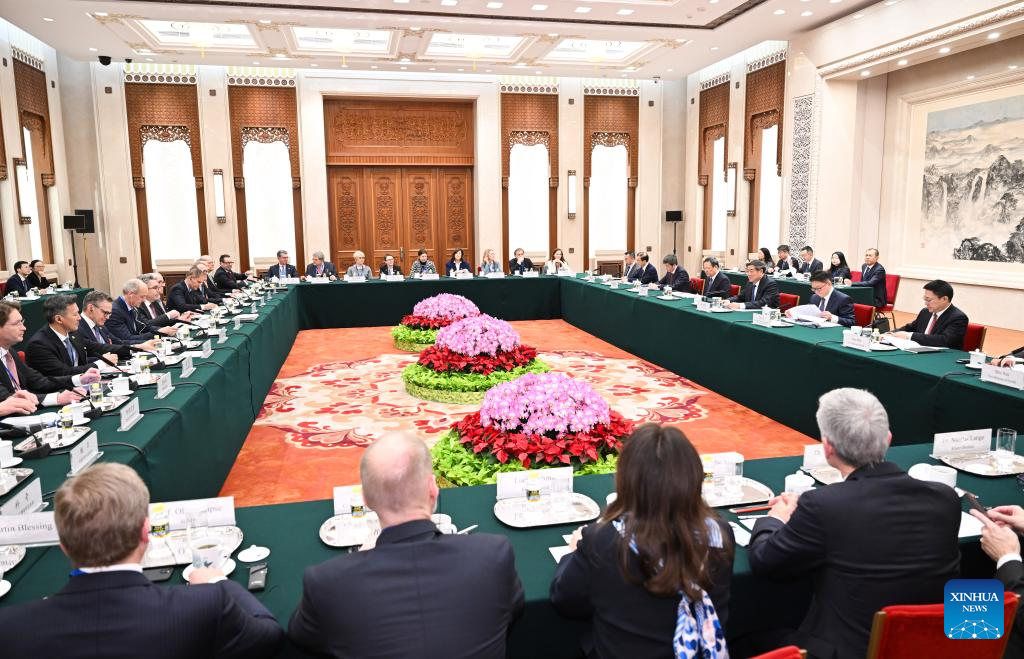
However, the real test here is risk management. Investors and stakeholders are currently weighing the probability of regulatory friction versus the growth potential of the Chinese market, which still boasts a projected GDP growth rate that outpaces much of the mature developed world. For German companies to commit to further expansion, they need more than just general assurances; they need granular clarity on intellectual property protections, data compliance, and market access protocols. You can find detailed updates on these regulatory frameworks and official government stances by following coverage in outlets like People's Daily, which provides the necessary context for how these policy shifts are being operationalized on the ground.
The move toward deeper cooperation could yield significant benefits for both parties, particularly in optimizing supply chains. If China and Germany can effectively align their standards for, say, green manufacturing or electric vehicle interoperability, they could reduce cross-border regulatory compliance costs by an estimated 5% to 8% annually. This kind of integration, if managed with transparent, data-driven policies, could provide a hedge against the volatility currently plaguing global trade. The solution is not necessarily to decouple, but to de-risk through diversification and deeper, more localized collaboration—essentially creating an ecosystem where the return on invested capital (ROIC) is protected by shared technical standards and mutual reliance.
Ultimately, the tone of this visit suggests that both Beijing and Berlin are aware that the costs of economic fragmentation are simply too high. Whether it’s a 12% increase in R&D collaboration or a 5% shift in manufacturing output, every percentage point of synergy matters in a global economy that is increasingly sensitive to interest rate fluctuations and trade barriers. It is a pragmatic, "numbers-first" approach to diplomacy, and it suggests that for the next fiscal cycle, the focus will remain firmly on stabilizing growth through concrete, tangible industrial partnership.
News source:https://peoplesdaily.pdnews.cn/china/er/30051502297